There is a particular type of American conceit, a persistent belief that our country is uniquely special in the world, indeed exceptional, a place that stands apart from other merely mortal nations with long traditions of democracy and respect for individual freedoms.
We are reluctant, perhaps even unable, thanks to this belief system, to see and absorb lessons unspooling in plain sight in other countries. It is in the nature of many Americans to think the rest of the world can’t really teach us much of anything.
We are in for a rude awakening.
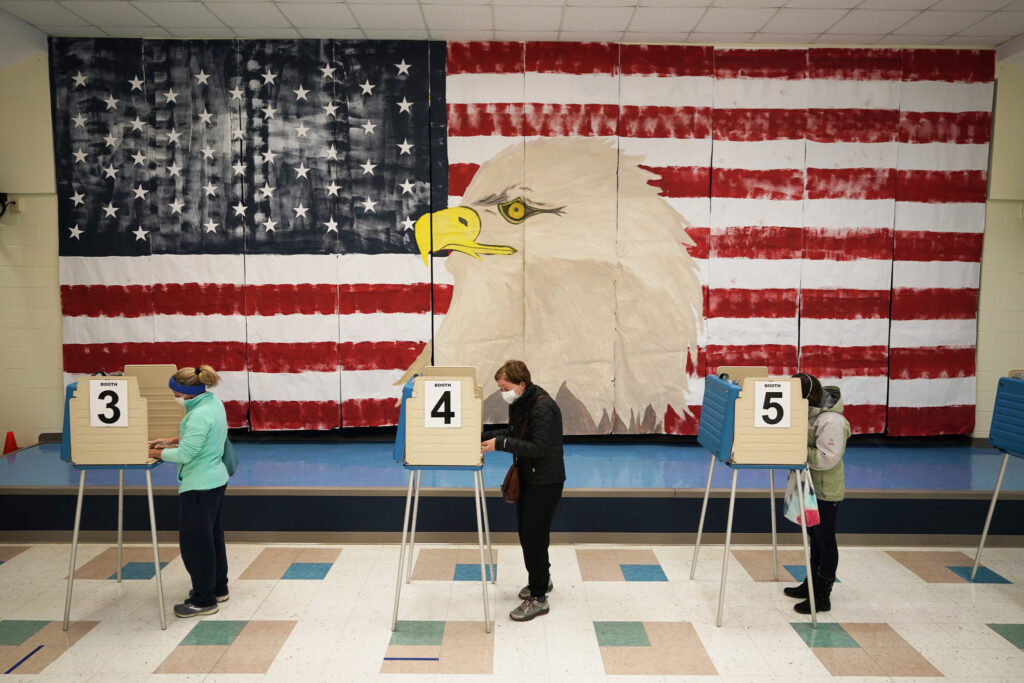
A recent New York Times/Siena College opinion survey contains this remarkable finding: “Voters overwhelmingly believe American democracy is under threat, but seem remarkably apathetic about that danger, with few calling it the nation’s most pressing problem.”
Furthermore, researchers who produced the study say, according to the Times: “doubts about elections that have infected American politics since the 2020 contest show every sign of persisting well into the future, the poll suggested: Twenty-eight percent of all voters, including 41 percent of Republicans, said they had little to no faith in the accuracy of this year’s midterm elections.”
The Big Lie is, in other words, persisting and metastasizing. “So far,” say analysts at the Brookings Institute, “we have been able to identify 345 candidates who will be on the ballot in November who have expressed election denial beliefs—false claims that the presidential election in 2020 was flawed. All of them are running as Republicans. The most important group—governors, secretaries of state and attorneys general—consists of candidates for statewide offices who, if they are elected, will have a great deal to say about how elections in their state will be run in the future. A second group are members of Congress.”
All of this adds up, if you’re paying attention and particularly if you care more about American democracy than your partisan priors, to a real time crisis. The mid-term election in 18 days could be the tipping point.
If Republicans capture control of the House of Representatives, as history and gerrymandering indicate they will, they promise to spend the vast majority of their time ginning up more fear and loathing with investigations of everything from the laptop computer of the president’s son to the immigration policies of the secretary of Homeland Security.
Additionally would-be future House Speaker Kevin McCarthy tells Punchbowl news that a House GOP majority will place the American economy at risk by leveraging an increase in the debt ceiling to force cuts in Social Security, Medicare and other government programs. It could well prove to be an example of the old GOP fiscal hostage taking on steroids.
Commentator Jonathan V. Last puts a fine point on all this when he writes “Republicans have announced that their electoral case to voters is a promise to create economic instability.”
McCarthy also says his House majority will curtail U.S. aid to Ukraine, a signal to Vladimir Putin that he should carry on his brutal war of genocide because the political party the Russian dictator supports in the United States really has his back.
A House Republican majority will also repudiate the essential work of the January 6 committee and will surely install election deniers and conspiracy theorists in key committee positions. Marjorie Taylor Greene, the utterly reprehensible congresswoman from Georgia, is already saying McCarthy better give her lots of power or he will live to regret it.
A recent profile of the far-right radical correctly places Greene’s craziness at the center of the modern Republican Party. “Over the past two years,” reporter Robert Draper wrote, “Greene has gone from the far-right fringe of the G.O.P. ever closer to its establishment center without changing any of her own beliefs,” beliefs that include insurrection encouragement and embrace of Q-Anon nonsense.
Republicans still have a legitimate chance to retake control of the U.S. Senate, as well, and if they do it will be through the election of a weird assortment of election deniers, insurrection promoters, a fraud doctor, a former football player who seems to really believe he’s a law enforcement officer and doesn’t know how many children he’s fathered and a guy who is running with the endorsement of the former president who says he provided that endorsement only after J.D. Vance kissed his, well, ample backside.
Add to this toxic mix an almost certain indictment – or indictments – of one Donald J. Trump, who will be running for president in 2024 from a courtroom in Georgia, or Florida, or New York or Washington, D.C., or possibly all simultaneously.
But back to that peculiar American conceit – we are special, a place where political chaos, even a democratic meltdown isn’t really possible. The country has persisted for nearly 250 years, after all, this conceit goes. We’re exceptional.
Nah.
There are many examples in the chaotic modern world of democracies fraying, even coming apart. Italy has installed the farthest right government since Mussolini marched on Rome in 1922. Hungary is dominated by a right-wing zealot who daily stokes fear and fans outrage, while being a role model for white nationalist zealots like Tucker Carlson. Trump fawns over authoritarian strongmen like Turkey’s Erdogan, China’s Xi and, of course, the murdering Putin.

But if you care to really see where American conservatism is headed consider what’s happened to the Conservative Party in the UK where a hopelessly incompetent prime minister has destroyed her political career (and maybe her party), while simultaneously seriously damaging the British economy.
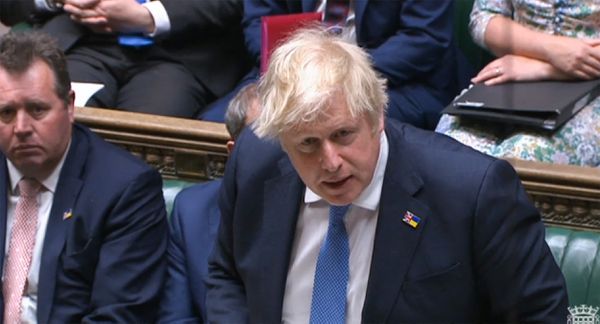
Liz Truss’s demise connects directly to her embrace of just the kind of economic policy future speaker McCarty is planning to implement – austerity, slashes to the social safety net and tax cuts for the most well off. Truss embraced and then u-turned on policies that she admitted would cause vast disruption. Now her approval stands at 9% and conservatives say they long to reinstate the disgraced former prime minister Boris Johnson. Whew.
This is a level of chaos and dysfunction that Americans should brace against. It is all possible here and then some.
British journalist Tanya Gold wrote about this British mess recently. My version of her conclusion changes just a couple of names. It amounts to a forecast for the future of our conceit.
“In time, America may free itself of Mr. Trump’s spell and Mr. McCarthy’s unreason — and choose leaders who deal in facts, not fantasies, and think of the country, not themselves. We may say at last: Enough of post-truth and extremism and drinking the dregs of empire. Yet that horizon is still a way off.
“Right now, we know, Mr. Trump (and McCarthy) will fall.
“For the Republicans, it won’t bring renewal. And for the country, it won’t bring catharsis.”
Additional Reading:
Some additional reading if you are inclined …
WILL PUTIN’S WAR IN UKRAINE CONTINUE WITHOUT HIM?
Dictators don’t often die in bed. We can hope.
We can also hope the loathsome ex-KGB agent’s days are numbered, but it may not matter to the war in Ukraine is Putin stays or goes.
“Any new leader who seeks to extricate Russia from Putin’s war likely will face tough domestic hurdles. Russia’s current domestic political environment, as characterized by an intense blame game pitting political versus military leadership, would be especially dangerous for Putin’s successor and disincentive any move to abandon Russia’s war aims in Ukraine and seek peace, at least in the short term. This holds even for a successor who opposed or did not openly support Putin’s war prior to taking office. Thus, Putin’s war may very well continue without Putin.”
Shawn T. Cochran writes at the website “War on the Rocks” about Ukraine, Putin and what happens if he goes.
A Brief History of One of the Most Powerful Families in New York City: The Morgenthaus
“The Morgenthaus were called the Jewish Kennedys, and remained, as the former mayor Ed Koch remarked, ‘the closest we’ve got to royalty in New York City.'”
Andrew Meier on a Gotham dynasty.
Arsenic and Old Lace: Madness in the Family
Film critic David Cairns on the Frank Capra classic with lots of Cary Grant for his fans, and who isn’t a fan of Cary Grant.
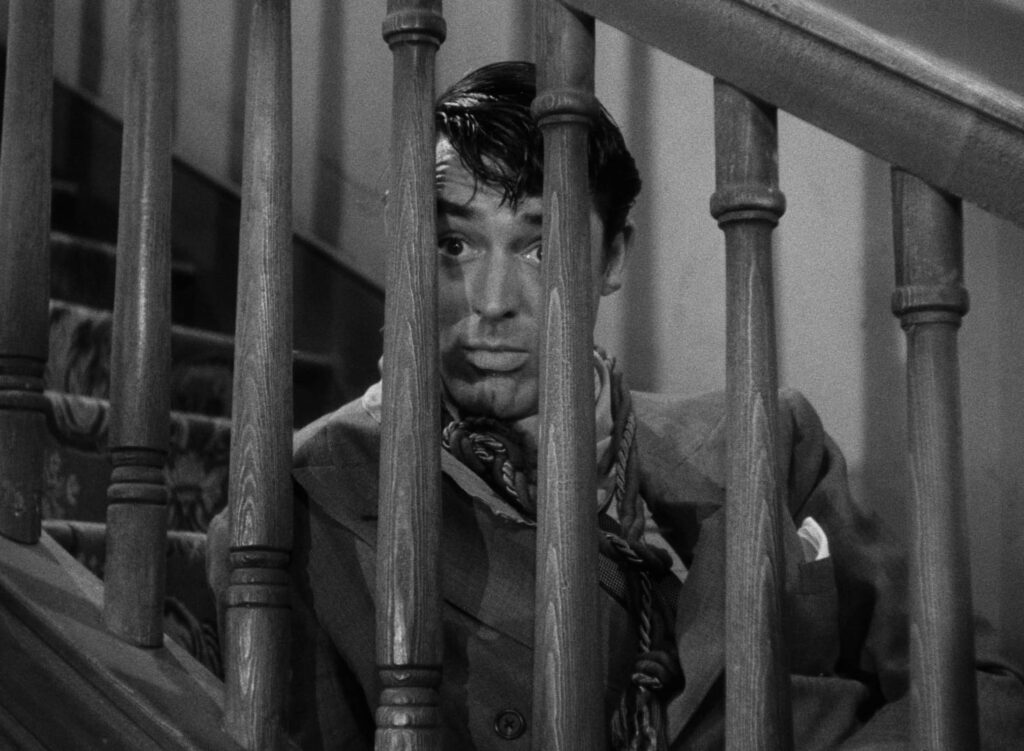
“Grant had been a freelancer since 1936 and would always remain one, enjoying his pick of projects from all the majors; Capra had recently ended his twelve-year alliance with Columbia—a studio he’d made respectable—and had tried his hand at independence with Meet John Doe (1941), but with war looming, he ducked back into the security of a studio project. He was drawn to the novelty of a movie without a message: during the thirties, he had become closely identified with a kind of populist social commentary. This time, he just wanted to have fun.”
This is a great piece if you like stories about the stories behind a movie.
WHAT THE DODGERS AND GIANTS’ 1958 MOVE WEST MEANT FOR AMERICA
I’m pretty certain that if the Dodgers were still in Brooklyn I would be a fan. In LA, not so much. This is a good story about how the the “move West” changed baseball, among other things.
“During the first decades of the twentieth century, what passed for national culture was very much a product of the East, particularly New York City. By 1980 or so, that notion no longer held.
“The move by the Dodgers and Giants helped kill it. The baseball shift West sent the message that you didn’t have to make it in New York to make it anywhere. Anybody could leave and thrive.”
Lincoln Mitchell literally wrote the book on baseball moving West. Here’s his essay on the subject.
Thanks for reading. Be well. All the best.