Our Unresolved Issue

Kentucky Sen. Rand Paul made a major speech at traditionally black Howard University in Washington, D.C. last week. To say the least the reviews of the senator’s speech were mixed. Comments ranged from “condescending and intellectually dishonest” to “nervy” and “sincere.”

Comedian Jon Stewart joked that Paul “fell asleep on the Green Line and woke up” at Howard and, while his history lesson was suspect, to say the least, I think the senator gets some points for even thinking about taking his libertarian infused Republican message to a generally hostile audience. His motives may have been sound, but with our great unresolved issue motives only carry you so far.

Paul’s point, of course, was to demonstrate GOP “outreach” to a segment of America that seems to have written off his party. Sen. Paul  may have been better served to first see the remarkable play I saw last weekend, since he might have learned that our racial and class issues don’t lend themselves to speeches from behind a podium, no matter how politically correct those speeches attempt to be.

Clybourne Park, the Pulitzer Prize and Tony award winning play by Bruce Norris, packs all the trouble we have as a society in dealing with race, class, political correctness, politics and how we live in America – together and apart – into a tidy two hours. Others have said it, so I will too – Clybourne Park is brilliant. You’ll be laughing, sad, nodding in agreement, snickering nervously in disbelief and, probably like me, walking out into the night thinking “we have a long, long way to go.”

The play, which also won the British version of the Tony, is set in a single house in the fictional Clybourne Park neighborhood of Chicago. The first half of the play takes place in 1959. The second half could have taken place yesterday afternoon. In a brilliant analysis of the play and the state of race in America, the former theater critic turned political analyst Frank Rich wrote in New York Magazine:

In 1959, a three-generation black family from a ghetto on the South Side has just purchased (the house) and is preparing to move in—over the objections of a neighborhood association that wants to keep its enclave lily-white. By 2009, that battle over integration is half-forgotten ancient history. Clybourne Park, like so many other urban neighborhoods nationwide, had long ago turned black in the wake of wholesale white flight to the suburbs. The house has since devolved into a graffiti-defaced teardown, battered by decades of poverty, crime, drugs, and neglect. But lo and behold, the neighborhood is “changing” again. A young white suburban couple is moving back into the rapidly gentrifying Clybourne Park. It’s convenient for work, and there’s a new Whole Foods besides. The only hitch is that middle-class African-Americans in the present-day neighborhood association are as hostile to white intruders as their racist white antecedents were to black home­buyers 50 years earlier.

The ensuing discussion among the black and white characters touches on almost every important cultural issue and leaves it all, as we must know, messy and unresolved. Clybourne Park will disabuse anyone who still thinks, even after Barack Obama’s two elections, that we are living in a post-racial America, which brings us back to the senator from Kentucky.

At one point in his talk to the over-achieving students at Howard Paul asked: “How did the party that elected the first black U.S. Senator, the party that elected the first 20 African-American Congressmen, how did that party become a party that now loses 95 percent of the black vote? How did the Republican Party, the party of the Great Emancipator, lose the trust and faith of an entire race? From the Civil War to the Civil Rights Movement, for a century, most black Americans voted Republican. How did we lose that vote?”

The answer, of course, is part of modern American political history. Liberal Democrats and many northern Republicans embraced civil rights from the 1940′s to the 1960′s, while many southern Democrats didn’t. Today is Jackie Robinson Day, the day Americans and (baseball fans) celebrate the breaking of the game’s color line. It’s worth reflecting on the historic fact that the great Robinson backed Richard Nixon in 1960, while convinced that the GOP was more committed to civil rights than a Democratic Party still dominated at the time by southern racists. Real events changed that expectation.

By 1968 Nixon was driving the racial wedge deep into the country’s politics with a “southern strategy” designed to take the conservative south away from Democrats by explicitly appealing to white voters with a message that hardly concealed its racist undertones. As a result many southern whites abandoned the GOP as the region transformed into a  solid base for the Republican Party as it had once been for Democrats. The party of Lincoln and ending slavery became the party of Strom Thurmond and “welfare queens” and blacks, no big surprise, started voting for Democrats in droves. Sen. Paul’s speech last week essentially ignored this history. Had he seen Clybourne Park he might have approached his subject in a much different way. At least I’d like to hope so.

The reason Sen. Paul laid an egg at Howard, and the reason we still struggle so much with race and class in America, is that we have largely failed to grapple honestly, openly and historically with our troubled past. Racism, there is no nice way to say it, is deeply baked into our history. The playwright Bruce Norris is essentially saying we are all weighted down with our deep biases based on our notions (and history) of territory and conflict. He admits to being a “liberal whitey” who is out to demolish politically correct approaches to issues that are way too big for set speeches that avoid fundamental issues.

From the Constitution’s “compromise” over slavery and counting blacks at three-fifths of a person to current battles over the Voting Rights Act and voter suppression the old battles over race and rights continues even as the first black man occupies the Oval Office. We have a lot of work to do.

The brilliant play Clybourne Park does not tie it all up neatly as the curtain falls because, as Frank Rich has written, it is a play that is designed to provoke and frankly is without much hope. Still, art can sometimes do what politics can’t – cause us to think deeply about our situation. The racism that is so deeply baked into our society and politics is not susceptible to better messaging, which, as Rand Paul found out at Howard University, is at the heart of the GOP’s current response to its problem with African-American voters. Better messaging starts with better listening and not ignoring history but understanding it.

We have a lot of work to do and many of us are comfortable with what that means. First we must deal honestly with the conflict between who we say we are and who we really are. It’s a very unsettling conversation. Go see Clybourne Park. Think about it. Talk to your kids about it. Talk to a politician about it. Perhaps really addressing our nation’s long unresolved issue takes so long because every American – of every shade and at every economic level – must address the hard and historic issues in the heart before they can hope to be settled in our politics. Clybourne Park is so powerful because it forces us, at least for two hours, to listen to who we are.


M.A.D. Men

You have to hand it to Senate Minority Leader Mitch McConnell of Kentucky – the guy knows how to go for the political throat. Mild mannered he is not. McConnell plays the political game like his home state Louisville Cardinals played basketball on their way to winning the NCAA national championship – full court pressure, sharp elbows, give no quarter and when the opponent is down dispatch them quickly so that there is no chance – none – that they’ll get back in the contest.

As he prepares for a Senate race in 2014 McConnell’s dismal approval numbers back home find him in familiar form – on the attack. First McConnell dispatched the one candidate, the actress Ashley Judd, who he probably should have dreamed about running against. For a few weeks earlier this year the national press, always a soft touch for a sweet talking celebrity, built up Kentucky-native Judd as though she were the second coming of Hillary Clinton. With perfect hindsight the political novice was never a serious threat to the toughest guy in the Senate, but McConnell and his operatives wasted not a minute labeling Judd a “Hollywood liberal” completely out of touch with Kentucky. Judd helped the labeling effort by acknowledging at one point in her non-campaign campaign that she and her husband “winter in Scotland. We’re smart like that.” Not surprisingly that line did not play all that well in Paducah, especially among the people who do winter there.

Still, before Ashley admitted the obvious and backed of from challenging McConnell – she’s smart like that – the Senator was plotting an offensive that would not merely leave the young woman battered and beaten in the bluegrass, but permanently disabled as a political pretender. McConnell and his advisers plotted defining Judd as “emotionally unbalanced” and, frankly, more than a little strange with off-beat ideas about religion and other subjects.

Standby. Cue the secret tape.

Mother Jones magazine, the same folks who turned up the infamous Mitt Romney 47% video, published a recording of McConnell and his campaign strategists plotting, as the Senate’s top Republican said, to play “whac-a-mole” with the young woman who might be his opponent.

“If I could interject,” McConnell says early in the leaked recording, “I assume most of you have played the game Whac-A-Mole? [Laughter.] This is the Whac-A-Mole period of the campaign…when anybody sticks their head up, do them out…”

When a tape of the “Whac-an-Ashley” session leaked, apparently at the hands of a Democratic Political Action Committee in Kentucky dedicated to doing to McConnell what he does to others, the Senator “maxed out” on the political rhetoric scale. As the Washington Post noted the Senator or his advisers invoked Nixon-style dirty tricks, the awful politics of the “political left” and even Hitler’s Gestapo. Whew. No mention of Castro? Or Hugo Chavez?

What McConnell (and many other politicians) and their opponents are doing with increasing frequency, and this would include the ham-handed “Progress Kentucky” group that apparently made and leaked the tape of the Senator’s “whac-a-mole” session, is a political update of the nuclear weapons strategy known as “mutually assured destruction.” The MAD theory holds that no sane person will use a nuclear weapon if they know with certainty that their enemy will react in kind. Both sides avoid the ultimate, well, whack because the stakes involved are just too dangerous.

McConnell’s strategy – again, not knew to him – is an update, a variation on MAD – nuke the other side before they even become a candidate. After all you don’t need to worry about the other sides missiles when the other side has no missiles.

No longer is it enough in our politics to defeat an opponent they must be “destroyed” or at a minimum “whacked.” Such a strategy is particularly effective when employed against a novice candidate, or candidate wannabee, like the young Ms. Judd. Before they know what has hit them they are effectively disqualified as a viable candidate. We can date the rise of modern “whac-a-mole” politics to the 1980 election when, for the first time on a national scale a new invention, the political action committee (PAC), made its appearance. Formed for the express purpose of attacking, wounding and ultimately destroying candidates these down-and-dirty operations both coarsened our politics and made the nuke ‘em strategy particularly popular with incumbents. The idea that campaigns before 1980 tended to be most local and statewide affairs seems positively quaint today.

If you wonder why the U.S. Senate has become a daily snake pit of hyper-partisanship where a lack of trust prevents serious work on the nation’s serious business, revisit those 1980 campaigns. Four-term incumbent Sen. Frank Church of Idaho was the prime target of the National Conservative Political Action Committee (NCPAC) that year and Church had been in NCPAC’s sights for months. NCPAC’s scummy director Terry Dolan boasted that “By 1980 there will be people voting against Church without remembering why.” He was right. Church lost re-election that year at the hands of a fundamentally dishonest campaign. The same kind of attacks took George McGovern, Birch Bayh, John Culver, Gaylord Nelson, nine Democrats in total, from the Senate in the same cycle. As the late Dave Broder wrote at the time the 1980 election “certainly had all the appearance of an era ending – and a new one beginning.”

Candidates learned from the ’80 election that political survival is best assured with a “first strike” of such overpowering force that the opponent is effectively destroyed. It is the rare candidate these days who find the character attacks – the whacking – so distasteful that they won’t go there, so McConnell is far from alone in embracing this new era. He may be the new era’s most skilled practitioner, however. In the Kentucky Senator’s case the nuke ‘em approach also has the benefit of making his campaign about small things rather than big things . Who wants to talk about Afghanistan or the budget when you can talk about Gestapo tactics and unbalanced potential opponents? So far McConnell has mostly succeeded in making this small story about the fact that his secret “whac-a-mole” meeting was secretly taped rather than about the substance of what was on the tape. In fairness to McConnell the Progress Kentucky PAC is clearly trying to pull on him what NCPAC pulled in 1980. They’re just not very good at it. Still, a pox on all the houses.

I know, I know, politics ain’t bean bag. Sharp elbows and unfair attacks are as old as the Republic. A young Lyndon Johnson once tried out on an aide a particularly scurrilous line of attack he was considering using against an opponent. The aide protested that the attack simply wasn’t true, but Johnson just smiled and said, “let him deny it.” Still, even LBJ eventually learned that there is more to politics that winning at all cost. Gleefully destroying opponents doesn’t do a lot for their reputation or yours.

Mitch McConnell is very good at the sharp elbows part of politics and, as he girds for a sixth term, clearly very good at winning elections. You shouldn’t put any smart money on the most unpopular man in the Senate losing next year. At the same time McConnell is proof of the truth contained in the old axiom that skills required for winning elections are not usually the skills needed to govern effectively. The history books will likely remember him for resisting every type of control on money in politics and for famously saying that “the single most important thing we want to achieve is for President Obama to be a one-term president.”

Disqualifying Ashley Judd won’t get you a chapter in Profiles in Courage and scorched earth politics – whether from a Mitch McConnell or the sleazy PAC out to get him – ultimately only feed the dysfunction of a Senate and a political system in need of real leaders rather than guys who spend their days plotting how to whack moles.


The Architect

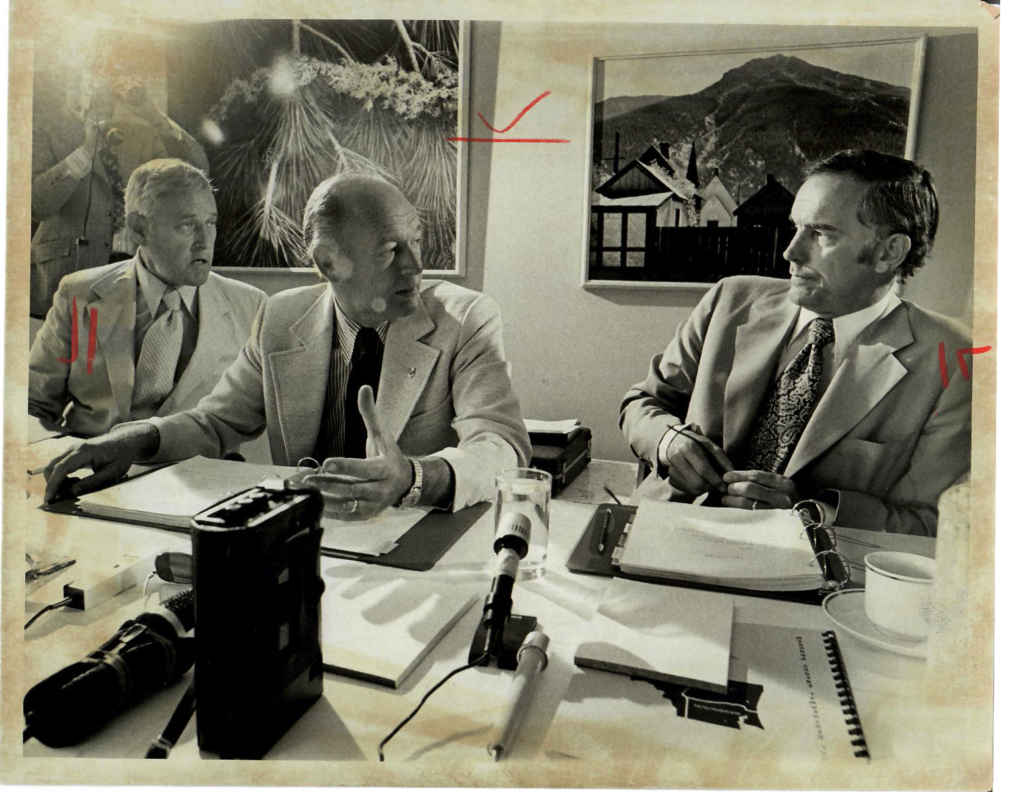
For most of the nearly ten years that I spent in front of a camera at Idaho Public Television in the late 1970′s and early 1980′s, Peter Morrill was behind the camera making me look as good as was humanly possible. (That’s Peter nearby upstaging Big Bird). That he didn’t always succeed in making me look good reminds me of the old joke about some of us having a face well suited for radio, but Peter always tried.

By the time I left television for good late in 1985 in order to tip my toe in the churning water of politics, the guy I always counted on to get the broadcast on the air had honed his television skills to the point where he could literally do it all. He shot the film – later the video – edited and polished the script, adjusted the lights, tinkered with the graphics, everything it seemed including jawing with the engineers about tweaking the transmitter. Peter had become through sheer design and love for the box with wires and lights a complete television talent who understood the business from the perspective of the kid carrying the tripod in the field to the state legislator wrestling over the public TV budget in the Statehouse. It was a natural progression for him to become General Manager of Idaho’s system and the guy who would lead Idaho’s only true statewide media organization to great accomplishments while serving an ever larger audience.

Morrill has been rightly praised over the last couple of weeks – the legislature passed a proclamation – following the announcement of his retirement that will come later this year. Typical Peter, he’s staying around until his successor is on the job and I use that word – successor – intentionally. Someone will follow him. He’s not going to be replaced.

During his 34 years at Idaho Public Television Peter Morrill and his team have won a bucket full of impressive awards, including an Emmy and a Murrow award, somehow found the money to upgrade the entire statewide system to a digital platform and made the Idaho system the most watched per capita in the nation. All the while Morrill has had to reach more and more Idahoans who are willing to pledge a few bucks a month to support not just Big Bird and Masterpiece, but truly outstanding, high quality local productions. In the public service space, Morrill and IPTV have been leaders with live coverage of the state legislature and the courts and in offering the most serious public affairs programming available on the tube in Idaho. It’s all been done with steadily diminishing resources from the state.

At the same time Peter has been an outspoken even courageous voice in defending the public television mission as  one of the few places in the current vast wasteland of cable where serious and occasionally controversial programming can be seen. This in fact may be his greatest legacy.

Obviously, I’m a friend and admirer and far from objective. Together in the old days we made some modestly important television – a trip to the then-Soviet Union that resulted in a couple of documentaries, some pioneering statewide public affairs programming produced with minimal modern technology and important political debates, including Church and Symms in 1980. We certainly had more fun and independence than our age and experience warranted and those years produced the kind of television war stories that remain cherished memories for life. We once shut down and partially flooded the Ram Bar in Sun Valley (during the day) when a portable light got a little too close to the ceiling sprinkler system. That video still exists, I think, as do about 20 bad takes of yours truly in a Dan Rather-style trench coat trying to complete a on-camera stand-up that came close to getting the better of me and had my camera guy, the impressive Mr. Morrill, bent over in laughter.

We once put the late, great environmental writer Edward Abbey on the air in Moscow (Idaho) for a half hour interview even after the author of The Monkey Wrench Gang insisted that he be allowed to continue smoking his big cigar during the broadcast. That was, of course, in violation of any number of rules, but the show must go on. Peter walked into a Russian Orthodox church service in Moscow (Russia) with a 16 mm film camera on his shoulder after assuring our KGB-like minder that of course we wouldn’t film anything inside the church. He did, mostly without having to look through the view finder.  The less said the better about that night on the town in the capital of “the evil empire.” Certain amounts of vodka were consumed. The good news – we weren’t sent to Siberia. We interviewed then-presidential candidate and future Secretary of State Alexander Haig in the bridal suite of an Idaho Falls hotel complete with a statue – very romantic – of Venus d’ Milo over the general’s shoulder. And, we once attempted election night coverage with a couple of interesting and opinionated on-set analysts – former Governors Bob Smylie and Cecil Andrus. The fun made up for the salaries.

Critics frequently contend that public television isn’t really all that necessary in an age when any cable or satellite subscriber can locate a couple of hundred channels from the comfort of the living room couch. The truth is just the opposite. If all you want to watch is the Real Wives of.…fill in the blank, or your idea is news is O’Reilly or Maddow then you don’t need public television. However, if an occasional documentary, serious drama or music program or a political talking head that does need to shout to be heard strikes your fancy then the public channel is often your best and only bet.

Peter Morrill did what very few people in his industry do. He went from the guy who actually makes programs to the guy who actually figures out how to put and keep them on the air. He mastered the details of every aspect of the business and in the process became a nationally respected and locally effective salesman for the very idea of public television. Not a bad career. Idaho is damn lucky he made the state his home and gave so much of himself to build and sustain one of Idaho’s greatest public assets.

It was my good fortunate to be along for some of the early ride and some of the best days I’ve ever had in what some would call work. Announcing his retirement, the State Board of Education called Morrill “an exceptional leader.” That’s it. Exceptional people, with real talent and commitment often become exceptional leaders of important organizations. Peter Morrill did just that and all the thanks he receives will be less than he deserves.


The Iron Lady

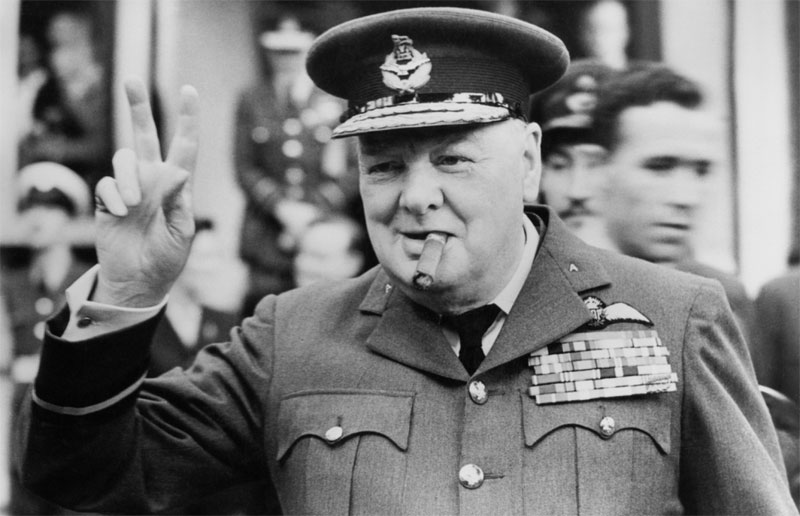
It was only during a trip to Argentina a few years ago that I came to fully realize the import, in both Argentina and Britain, of the 1982 mini-war over the Falkland Islands in the south Atlantic. The war is still a raw and recent sore for Argentina and a (mostly) proud moment of triumph for what is left of a empire that once never saw the sun set.

The Argentine invasion of the sparely populated, wind-blown and British controlled islands came at a low point of then-Prime Minister Margaret Thatcher’s popularity. But, in the wake of the Argentine aggression, when Thatcher summoned her best Winston Churchill and vowed to retake one of the last remaining outposts of the British Empire her stock began to rise and she truly became the Iron Lady of late 20th Century history.

Lady Thatcher’s death at age 87 will set off a wave of analysis about her role in world affairs, her relationship with Ronald Reagan, who she once called the “second most important man in my life,” and her political legacy. The final chapter on Thatcher – “steely resolve” is the favorite description today – will not be written for another decade or more as Great Britain, under the current Tory government, sorts out its place in Europe and the world, but this much can be said – she was, in the spirit of that great British term, a “one-off,” a tough, demanding, outspoken conservative woman who played politics with sharp elbows and a biting sense of humor. And she often played her role better than the men around her.

One can only speculate that the military junta who ruled Argentina in 1982 never in its wildest dreams believed that an economically troubled Britain so far removed from the islands they call the Malvinas and led, of all things, by a woman would actually resort to force to retake a little patch of rocky soil. Channeling Churchill and vowing not to let aggression stand, Thatcher assembled a War Cabinet, which she dominated, and deployed the British fleet and the Royal Marines. Thatcher’s Royal Navy, for good measure, sunk an Argentine battle cruiser after it had been well established that the generals in Buenos Aires where simply no match for the Lady at 10 Downing Street. The same could later be said for the old men trying to hang on to power in Moscow. Thatcher’s legacy certainly must also include a chapter on her role in defending democratic aspirations in eastern Europe, particularly Poland.

One of the best and most even handed assessments of Thatcher came today from Richard Carr a British political scientist and historian of British Conservative politics: “To supporters, she changed Britain from a nation in long-term industrial decline to an energetic, dynamic economy. To opponents, she entrenched inequalities between the regions and classes and placed the free market above all other concerns. Our politics, and many of our politicians, have been forged in her legacy.” That last sentence may best describe her real importance. Every British politician today has to reckon with Thatcher, just as every American politician must reckon with FDR, JFK and Reagan.

Like her friend Ronnie, the “B” movie actor from humble origins who became a transformative president, Thatcher, the daughter of a grocery shopkeeper who fought her way to the very top of British politics, helped define an era. As the Washington Post pointed out Thatcher modernized British politics to such a degree that future Labor Prime Minister Tony Blair adopted many of her policies and approaches.

“While unapologetically advancing what she considered the Victorian values that made Britain great, Mrs. Thatcher thoroughly modernized British politics, deploying ad agencies and large sums of money to advance her party’s standing,” the Post wrote today.  “The Iron Lady, as she was dubbed, was credited with converting a spent Conservative Party from an old boys club into an electoral powerhouse identified with middle-class strivers, investors and entrepreneurs.” Thatcher’s was the kind of re-invention of the British Conservative Party in the late 1970′s and 1980′s that some American Republicans only dream about for their party today.

Thatcher once said she never expected to see a woman as British Prime Minister, but it is a testament to her and her political party – mostly her – that she seized the chance when she got it and played her hand skillfully for 11 powerful years on the world stage. At her death there will be the inevitable comparisons with “the iron lady” of American politics Hillary Clinton, but in many ways the comparisons really don’t work. Sure, both women are tough and in many respects were tried by fire, but after those similarities the comparison breaks down.

Thatcher was old school. She beat the boys at their own game. She may have been carrying a handbag, but when she swung that bag she aimed for someone’s head. She was also unabashedly full of convictions and understood power. “Being powerful is like being a lady,” she once said. “If you have to tell people you are, you aren’t.”‘

Is hard to envision The Iron Lady – she once famously told a Tory Party conference “You turn if you want to. The lady’s not for turning” – making a YouTube video to announce a change in her position on same sex marriage. Thatcher was a true conviction politician, while Clinton seems to be falling into the same trap that ultimately doomed her presidential candidacy in 2008. She allows her handlers – Thatcher, by contrast, did the handling – to consistently portray her not as a leader of deep and important conviction, but as a woman of destiny, the first female American president who will get there as an inevitable fact of history.

Clinton may eventually find, as Maureen Dowd wrote recently in the New York Times, that she can learn new tricks and not merely be inevitable, but also necessary. ”Even top Democrats who plan to support Hillary worry about her two sides,” Dowd wrote. “One side is the idealistic public servant who wants to make the world a better place. The other side is darker, stemming from old insecurities; this is the side that causes her to make decisions from a place of fear and to second-guess herself. It dulls her sense of ethics and leads to ends-justify-the-means wayward ways. This is the side that compels her to do anything to win, like hiring the scummy strategists Dick Morris and Mark Penn, and greedily grab for what she feels she deserves.”‘

There is, of course, nothing inevitable in history and acting on fear is never a winning strategy. Political leaders respond to events, as Thatcher did in the Falklands and to the Cold War in Europe, and either make their mark or are swept along by events they cannot figure out how to control. Thatcher left marks.

As Michael Hirsh points out in a piece at The Atlantic website, no one ever wondered – for good or bad – where Thatcher was coming down on an issue and, as a result, “she became the first female leader of her country, and she did it in such a determined way that her sex was almost an afterthought.” Put another way, Thatcher was a genuine transformational world figure by strength of conviction and by raw political skill. Nothing inevitable about that.

If Clinton does something similar she may some day have a chance to join the real Iron Lady in the history books. Today, however, there is only one female political leader – at least in the western political world – whose place in those history books is secure.


Justice, Sort of, and Finally

A hamburger, a walk in the desert and a baseball game. Pretty mundane stuff for most of us, but not if you have spent the last 42 years in prison, as Louis Taylor has, for a crime he says he never committed.

Taylor walked out of jail in Arizona this week, a free man, but without the satisfaction of having his widely disputed conviction for the arson deaths of 28 people overturned by the state that locked him up all those long years ago.

Louis Taylor was 16 years old in 1970 when a downtown Tucson landmark, The Hotel Pioneer, caught fire just before Christmas. The old hotel was packed with out-of-town Christmas shoppers, many from Mexico, and with folks attending a party for Hughes Aircraft employees. Young Taylor was at the hotel, too, he said to cage a little food and maybe pick up a drink or two. As the fire raged through the multi-story hotel Louis, at the direction of a first responder, went door-to-door alerting people to the blaze. Some fire fighters later said they considered him a hero for helping get hotel guests out of the burning building, while tragically others died of carbon monoxide poisoning or from leaping to their deaths.

Later than night, after extensive questioning by police without a lawyer or other adults present, Louis Taylor was arrested and charged with the arson deaths of 28 victims – another person died later of injuries. Taylor’s story to police, it must be noted, was inconsistent and confused, but the police and arson investigation was, as well. No recording was made of the police interview and if officers made notes of the interview with the teenage Taylor those records never surfaced. An all-white jury convicted the young African-American boy and he was sentenced to consecutive life sentences for 28 arson related murders.

Decades later Louis Taylor’s cause was taken up by journalists – the CBS ’60 Minutes’ story by Steve Kroft is a classic piece of investigative television reporting – and by a group of volunteer lawyers, former judges and law students who staff the Arizona Justice Project.  One of Taylor’s pro bono lawyers, former Arizona Supreme Court Justice Stanley Feldman told a Tucson television station, ”I can’t imagine a case where in which someone was convicted of a crime, a truly horrible crime on so little evidence.”

The collective work of the volunteer lawyers and the pushy journalists eventually succeeding in raising enough doubt about whether the Pioneer Hotel fire really was a case of arson that the Pima County, Arizona prosecutor Barbara LaWall finally agreed to petition the court, not for a new trial for Taylor, but for a convoluted and fundamentally unsettling deal whereby Taylor agreed to plead “no contest” to the 28 murders in exchange for his release for time served – 42 years. He also gave up all rights to seek compensation or to be considered not guilty in the eyes of the law.

Taylor is a free man this week and he spent his first hours of freedom visiting an In-and-Out Burger, taking a walk in beautiful Sabino Canyon in Tucson and watching the Arizona Diamondbacks play baseball in Phoenix. He says he’ll start over and devote his life to doing good works.

I’ve followed this case since ’60 Minutes’ broadcast its first story in 2002 and, while Taylor’s long story can properly be characterized as some sort of delayed justice, it is also a supreme example of how the American justices system, with its delicate balance of protections for society and the accused, can be twisted and abused. Any fair reading of the facts of the Taylor case makes it clear that evidence that may have been exculpatory was never presented to the defense or the jury. The Arizona Justice Project’s deposition of one of the original fire investigators – a portion is included in Steve Kroft’s piece – is shocking. The investigator calmly concludes, without a hint of evidence, that the hotel fire had to have been set by a “negro” who must have been about 18. Five other independent fire investigators sifted the evidence from 1970 and concluded that the fire was of “undetermined” origin. As another Taylor lawyer says – no arson, no crime. Even the judge in the Taylor trial now admits he wouldn’t have voted to convict the young man.

And there is, of course, the reality of what was at least a six hour police interrogation of a young man of color who was questioned without the benefit of counsel. Put yourself in those shoes.

After noting that the investigators who determined in 1970 that the Pioneer fire was arson stand by that judgment all these years later, the Pima County prosecutor made the obvious admission that a new trial for Taylor, based on modern standards of arson investigation, would likely not result in another conviction. Still, hanging on a thin procedural thread, the prosecutor would only agree to the convoluted plea bargain that, while not exonerating Taylor at least set him free.

Read for yourself the tortured reasoning of the state in this relevant paragraph from the prosecutor’s filing with the Tucson court:

“The legal question presented to the court today is whether a review of the original evidence using new advances and techniques in fire investigation is legally ‘newly discovered evidence.’ Although this question hasn’t been addressed in Arizona, and it appears no Arizona court has ruled on the legal question of new arson techniques being ‘newly discovered evidence,’ at least one jurisdiction has determined that such advances in fire investigation techniques would constitute ‘newly discovered evidence.’ If that were the result in the instant case, the state of the evidence is such that the State would be unable to proceed with a retrial, and the convictions would not stand.”

So, why not just admit, given all the “new evidence” that Taylor’s conviction did not meet the threshold test of “beyond a reasonable doubt?” Good question for a prosecutor who told the court that the deal she insisted upon will “maintain the integrity of the defendant’s conviction.” LaWall, by the way, won re-election last fall with 97% of the vote against a write-in candidate.

As for Louis Taylor, as CBS reported, he “faced a choice as new doubts emerged about his conviction: He could continue his fight, maybe for years more, to clear his name and potentially sue for a big settlement. Or he could enter a plea and get out of prison now, giving up any opportunity to file a lawsuit against the state.”

“You can’t make up for 42 years. You just gotta move forward,” Taylor said and then he went to a ball game.

There are no doubt many lessons from Louis Taylor’s case, but the first and last lesson is this: the justice system we have, as good as it is, is never perfect. Mistakes are made because people are human and bias and racism and assumptions creep into to conclusions that become facts.  It is equally true that future mistakes can only be avoided when good people, charged by us to do this essential and delicate work, admit when a mistake has been made. If you can’t be sure “beyond a reasonable doubt” then you can’t be sure at all.


Savor the Spring

“Spring training means flowers, people coming outdoors, sunshine, optimism and baseball. Spring training is a time to think about being young again.” – Ernie Banks

The fellow with the unique hat – it was a Cubs game so there were more than a few crazy hats – was selling suds and peanuts last Saturday in the sunshine in the desert. The Cubs won, but that was hardly the point. God was in her heaven, again, and baseball is back. It’s time to think about being young again.

They’ll play the last of the pre-season games this week in Arizona and Florida, the last quiet days of a long, long season that will likely feature drama in the Bronx and at Fenway and perhaps something approaching jubilation in Washington, D.C. where baseball success has been as historically hard to come by as bi-partisan agreement. The loaded up Angels of Los Angeles by way of Anaheim have had a dismal spring, but expect them to be there in the fall. The Royals and Orioles have blistered their respective leagues and are fun to watch, but spring training does not a season make. My beloved Giants could be contenders again, but it’s hard in this game to win year-after-year, just ask Brian Cashman.

In the screwy economics of baseball you now pay $32 for a Cubs spring training game in Mesa to watch a bunch of guys even die hard fans have never heard of. Beware the “split squad” – SS on the schedule – where the boys destined for Salt Lake City and Iowa show up wearing number 69. The ballplayers may be minor league, but the fans are the real deal and so are the beer vendors. Next year the Cubs will have a spanking new spring training complex a couple of miles from cozy Hohokam Field. When the Cubs ownership cleared their throws a while back and mumbled “Florida” the City of Mesa decided to pay any price to keep spring training and the Northsiders in town where they have trained in the spring for 35 years.

Meanwhile, the Oakland A’s will abandon quaint and small Phoenix Municipal Stadium in 2015 to relocate to the ballpark the Cubs are leaving after this year. The City of Mesa – these folks love baseball and long-term economic development – will finance up to $17.5 million in upgrades to Hohokam Field. If you don’t think baseball, even at this level, is good for a community just ask Tucson which lost all of its spring training tenants a while back. Where once 10,000 baseball fans filled a Tucson stadium the city has tried to make up for its hardball drought with soccer. I love soccer, but it’s not quite the same.

Spring training has gone from a nice, rather low key annual ritual to very big business. The Phoenix area now markets the Cactus League as among its very biggest attractions. A two-year old study of the economics of Cactus League baseball pegged the impact at least $350 million annually. That Saturday game in Mesa drew an announced crowd of more than 13,000 and considering how hard that beer guy was working most of them had at least one Old Style. It was a warm day.

The Milwaukee Brewers train in these parts, as well, and the Brew Crew just parted with $33 million over three years for a 34-year-old pitcher with a career record of 118-109 with a 4.45 ERA in a dozen seasons with four clubs. Nice work if you can get it.

As Yogi allegedly once said, “Baseball is the champ of them all. Like somebody said, the pay is good and the hours are short.” And this time of year you really can think of being young again. The “real” season will begin soon enough. For the next few days we can work on our tan – with sunscreen, of course – and wonder who the heck that guy is wearing #74. Savor the spring.

“The way to make coaches think you’re in shape in the spring is to get a tan.” – Whitey Ford