
When Joe Biden says he will govern as a president who represents all Americans, even those who did not vote for him, I take him at his word. But I also know millions of fellow Americans don’t.
Biden’s words about wanting to be a uniter, a president who seeks and finds common ground, are surely welcome after some many months of purposeful division. But without genuine action – and by that, I mean more than policies, executive orders or even legislation – Biden’s words will ring hollow for many Americans. Many don’t believe he’s sincere because, well, we live in a deeply cynical and polarized age.
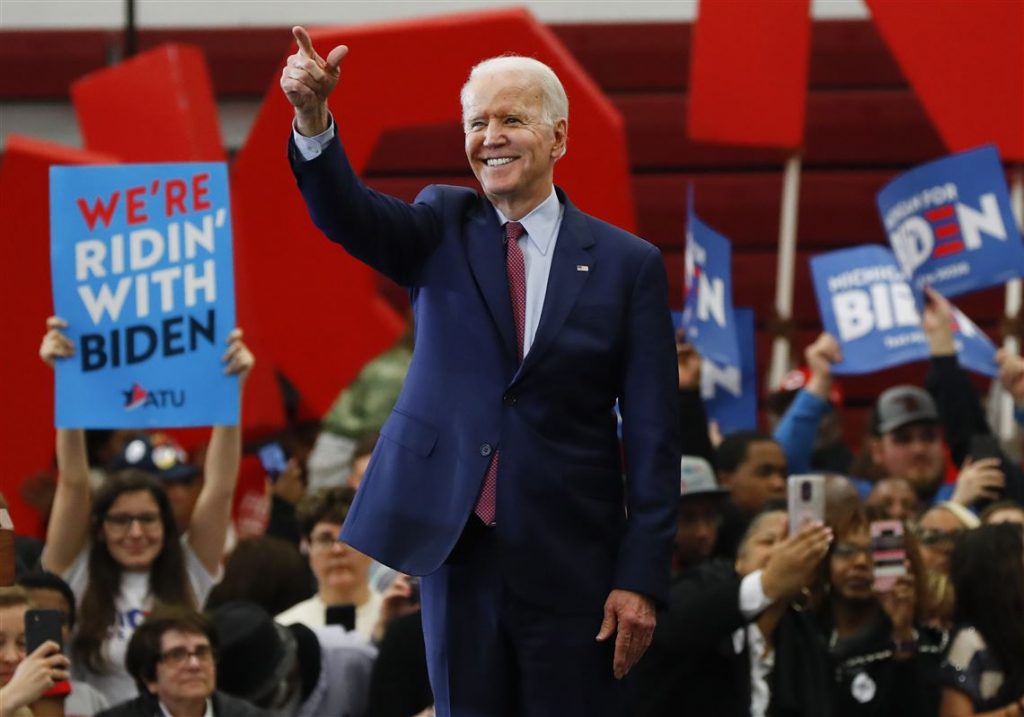
So, as a Democrat in the rural west, I offer some tough love to the new president and to his staff, a group like the staff at every White House who will all too soon become victims of inside the beltway thinking that will almost certainly short circuit the new president’s efforts at unity. Three suggestions.
Get out of the bubble. A still raging pandemic makes it difficult to travel and engage with real Americans, but Biden and the White House must find a way. Despite the pandemic, political pros like senators Ron Wyden of Oregon and Jon Tester of Montana have been holding virtual town hall meetings in their states. Until he can travel, Biden should be pushing hard against a presidency that is defined exclusively on inside the beltway terms.
If I could command the White House communication shop, I’d have Biden and vice president Kamala Harris doing weekly sessions with real people, Republicans, Democrats, independents, young and old in every region of the country. The desire to control such presidential interactions causes careful staffers to fret over a real person posing an uncomfortable question that might induce a gaffe. The hell with such thinking. Biden is at his best in small group, one-on-one situations. He’s an experienced retail politician. Empathy is his long suit. Take the shackles off and let the president mix it up with real folks, particularly including those who didn’t vote for him.
Listen and learn. The desire to avoid risk is a huge limitation on political action and political persuasion. Every politician is expected to have a crisp, detailed and often meaningless answer to every conceivable question. But real life is more than a 12-point plan and begins, as Woody Allen famously said, with showing up, and beginning to connect.
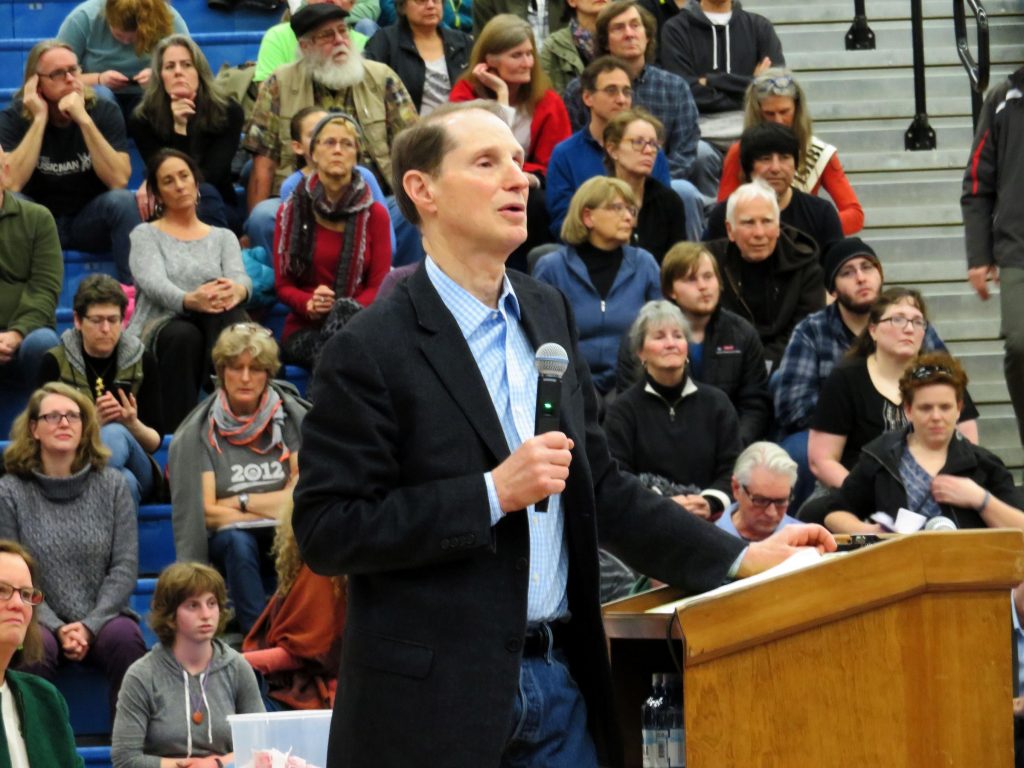
Biden and his handlers can make a virtue out of merely showing up and listening. They don’t have to have a detailed position paper on every issue. Oregon’s Wyden is particularly good at this kind of listening. He starts his town halls with a sentence or two about some big issue in the news and then listens to questions and concerns from his constituents. Often, he has a good answer, but nearly as often he will turn to a staffer and say, “we need to do some more work on this and get back to this guy.”
The key is to listen, and of course to get back.
Imagine if the president of this apparently hopelessly divided country would show up in a small town in the rural south or central Iowa or Bonner County, Idaho and told local county commissioners, school board members, business owners, farmers and retirees: “I want to hear what’s on your mind. I want to hear your solutions to our biggest challenges.” I think jaded Washington hands would be stunned by the power of a disarming sentence like: “I really want to know what you are worried about.”
Would Biden get some seriously awkward questions? You bet. Would it make for great television? Absolutely. Forget the big, boasting, fact-free rallies that have passed for presidential leadership for the last four years. Let’s have real Americans talk directly to the new president. There is a fair chance the country would get smarter. And Biden would begin to prove that he listens and cares, even cares about and listens to those who didn’t vote for him.
Come West. It’s become a tired cliché, but that doesn’t mean it’s not true that broad swaths of the nation are “flyover country,” precincts seldom visited by a national politician. It’s also a truism that Democrats have suffered a deep and persistent decline in most of flyover country in large part because too many on the political left don’t care – or act like they don’t care – about the West.
You can date much of this to the widespread and not inaccurate view that Bill Clinton (and then Barack Obama) didn’t know the West and didn’t try to learn about what they didn’t know. Donald Trump appealed to many in the West despite the fact that he hadn’t a clue about why forest fires continue to rage or that public lands are where westerners hunt, fish and recreate. Showing up and listening to the very real practical concerns in flyover country would be the beginning of understanding and the foundation on which trust might be built.
Tester, the last significant Democrat standing in Montana, also still operates a family farm on the Hi Line, and he put a fine point on all this in his recent book Grounded.
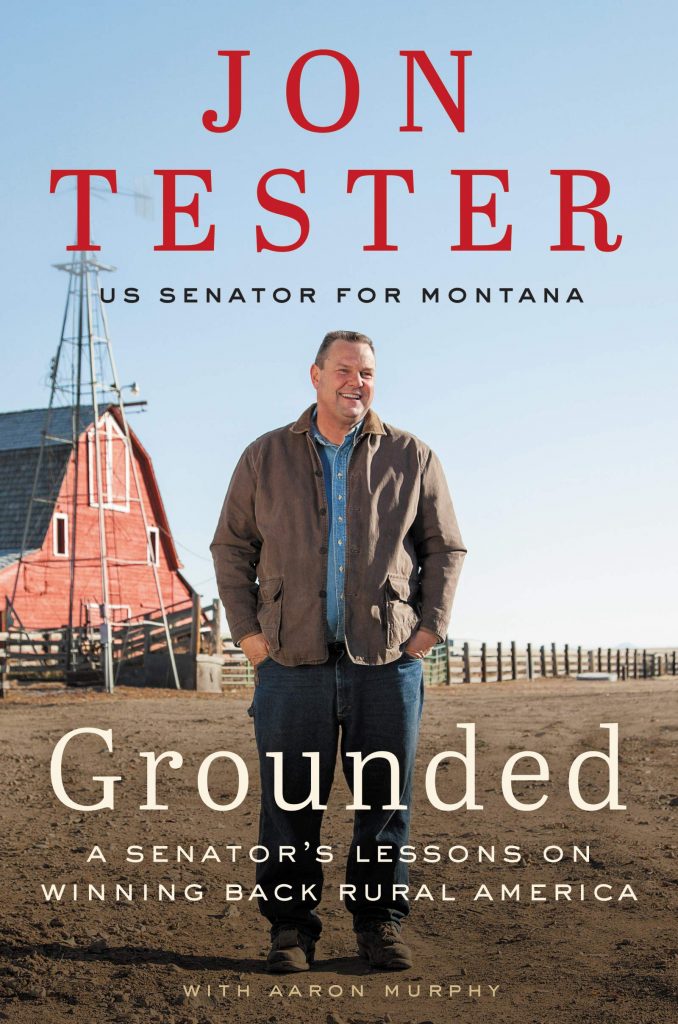
Rural westerners, Tester writes, have “given up on whatever ‘normal’ is in politics, because that normal has failed them. The status quo ain’t working, and we ought to be listening – truly listening – to what rural America has to say about it.”
So, twice a month Biden and his staff should pick a spot in rural America and go and listen. A good place to start would be an old railroad town 30 miles from Tester’s farm. The last president to visit Havre, Montana, the county seat of Hill County, was Harry Truman in 1952. Trump won the county with 54% of the vote last year. Tester won the same county with 58% in 2018.
Imagine a town hall in Havre. No speeches and no malarky, as Biden might say, just real folks and real issues and real listening. The power of showing up and listening just might be the first concrete step to disarmament in our uncivil war.
—–0—–
Additional Reading:
My weekly curation of worthy reads from here and there…
Henry Aaron
The great Aaron has always been my favorite player of the great game. He was the quintessential “all tool” player. He could hit for power and average. Run the bases. He could play defense and had a great arm. His recent death hit all baseball fans hard.
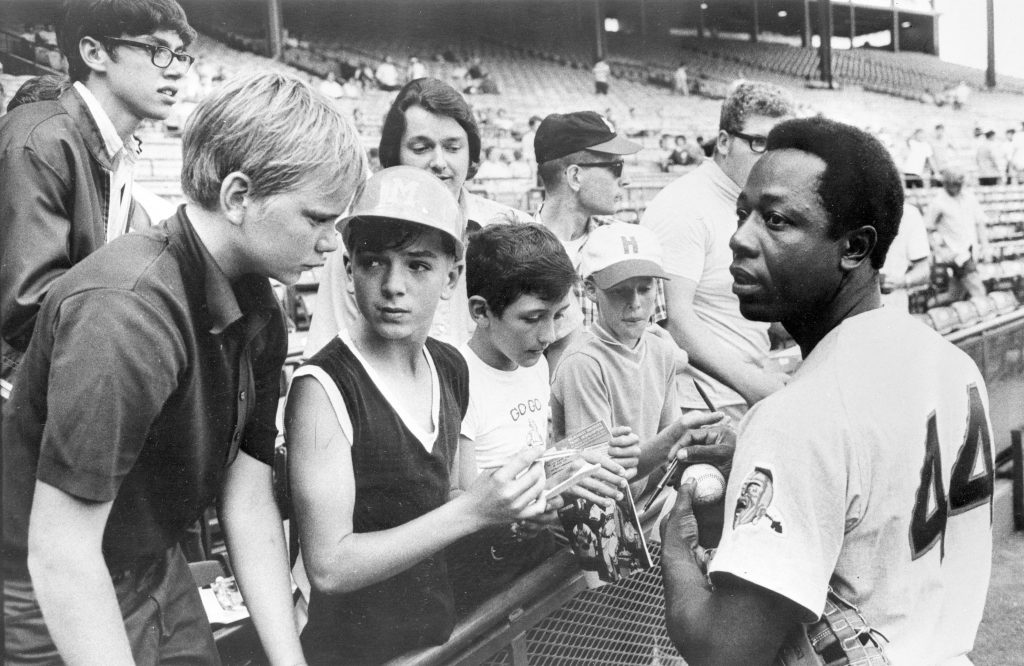
And Henry Aaron was a genuinely decent man who played brilliantly and quietly through a lot of adversity and made a tremendous contribution on and off the field.
“Aaron’s consistency is unparalleled in baseball history, and perhaps in all of North American team sports. He qualified for the batting title in each of his first 19 seasons, hit at least 24 home runs 19 seasons in a row, and scored at least 100 runs 13 times in a row. He hit .300 in 14 seasons, and he posted at least 6.0 bWAR every year from 1955 to 1969, a 15-year streak that nobody had matched before or has since.”
Great piece by Michael Baumann.
Forcing out the Fringe
Republicans struggled this week with two extremely difficult issues: what to do with a conspiracy theory believing freshman House member and what to do with a GOP leader who voted to impeach Donald Trump.
Historian Matthew Dallek provides some context for the first issue by reviewing how the GOP once distanced itself from the John Birch Society, a conspiracy theory embracing group of ultra-right loons that came to prominence in the 1950’s…and now is, sort of, back.
“By stigmatizing, punishing and outvoting the forces that wanted to burn it all down in the 1950s and 1960s, Americans ostracized them; the United States put a lid on the toxic stew of bigotry, conspiratorial thinking and White Christian identity politics, and defended democratic values like truth, equality and racial justice. It was a whole-of-society strategy, more effective than anything unfolding today. Clearly, it didn’t keep those forces at bay forever. But in the right circumstances, it could work again.”
The Second Shot Proves the Vaccine is Working
Katherine Wu in The Atlantic.
“Dose No. 2 is more likely to pack a punch—in large part because the effects of the second shot build iteratively on the first. My husband, who’s a neurologist at Yale New Haven Hospital, is one of many who had a worse experience with his second shot than his first.”
Get ready…and get the vaccine when you can.
All the best…and thanks for reading.


 For a state that hates government so much, Idaho sure has a lot of it.
